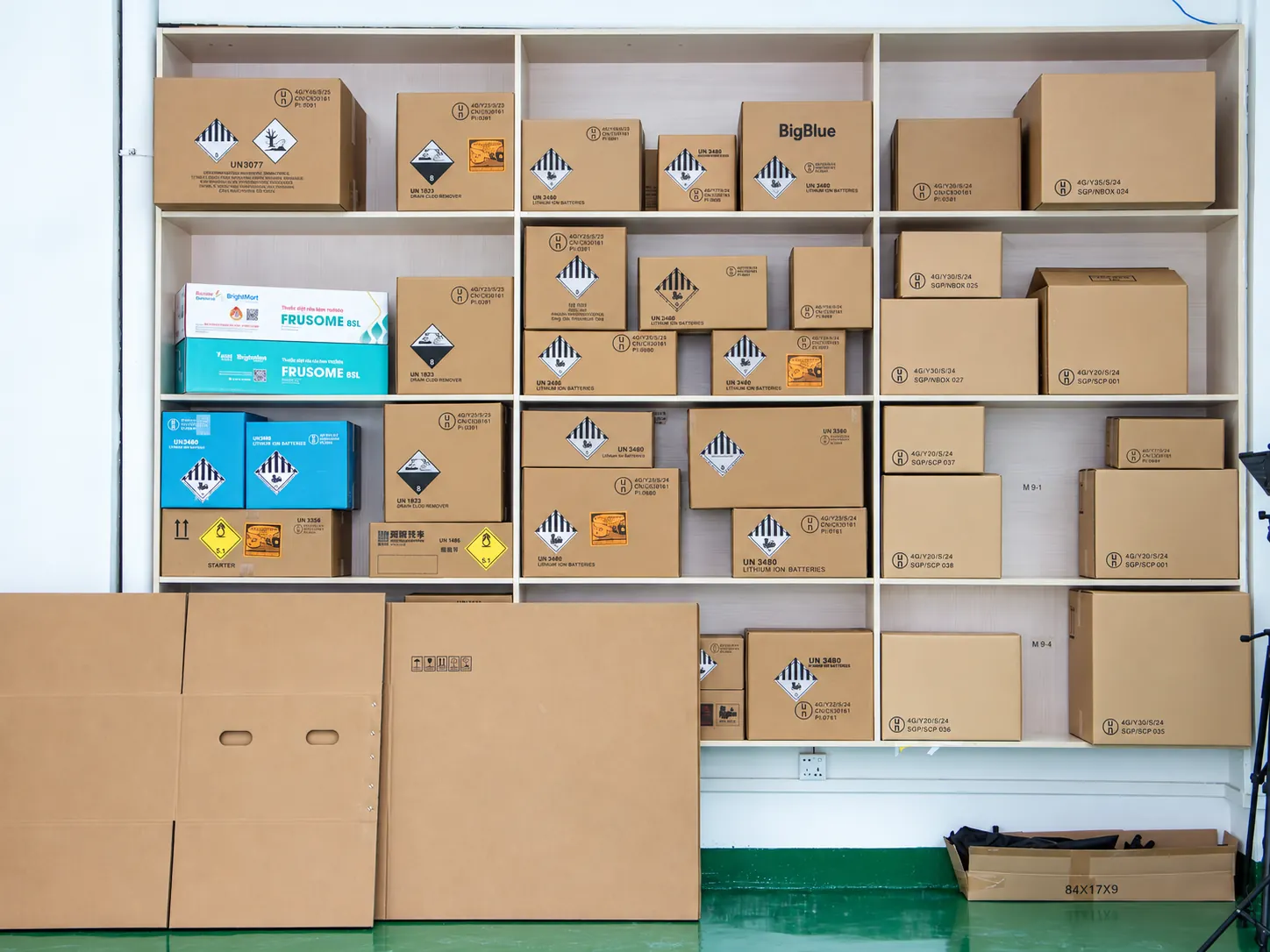
Export-ready dangerous goods packaging and custom protective solutions.

Packaging Manufacturing & Customization
Bring us your product dimensions, packing method and shipment requirements. We work through the carton structure, printing and internal protection with you, then use the agreed specification for sampling and production.
Define the Pack Around Your Product
Box dimensions are one part of the specification. We review how the product sits inside the pack, how the box is assembled and closed, and how the finished packaging will be handled.

Materials and processing options are confirmed for the proposed design. The box and internal protection are discussed together so the specification reflects the complete packing arrangement.
From Board Sheets to Finished Cartons
Our workshop handles carton processing, printing and joining. The production sequence is selected around the agreed box structure and order requirements.
Ready to play.
Select a step to watch the process.
Sheet Preparation
Board sheets are prepared for the agreed carton size and processing route.
Printing
Approved artwork and printed information guide the printing stage, including the position of logos, handling marks and other required text.
Carton Joining
Machine-assisted or manual gluing is used as appropriate for the specified carton structure and production arrangement.
Bundling & Packing
Cartons are grouped and packed for the agreed order quantity and handover arrangement.
Check Fit, Structure and Artwork Before Production
Sampling gives both teams a practical way to review the proposed pack. Agree what the sample needs to demonstrate and which details must be settled before the order moves into production.

Check Fit, Structure and Artwork Before Production
Sampling gives both teams a practical way to review the proposed pack. Agree what the sample needs to demonstrate and which details must be settled before the order moves into production.
Product Fit
Review usable internal space, product orientation, insert positions and the clearance needed for loading and removal.
Assembly & Closure
Check how the box is folded, joined and closed, including the packing sequence and any separate internal components.
Printing Position
Review artwork, text and placement around folds, openings and closure surfaces. Confirm any separate print proof requirements for the order.
Production Reference
Confirm the dimensions, materials, structure and artwork to be used as the production reference. Highlight any changes to the sampled arrangement before production is scheduled.
A structural sample helps confirm fit, assembly and print placement. Any performance evaluation is agreed separately for the specified packaging and packed product.
Custom Structures from Past Projects
These two projects show how corrugated components, covers and a plywood pallet were combined for different packing requirements.
Seven-Ply Corrugated Sleeve with Separate Covers
A battery-packaging project used a seven-ply corrugated sleeve, separate top and bottom covers, and a plywood pallet. The components were specified together for the packing arrangement.
- Example sleeve size: 1,480 × 1,140 × 550 mm
- Sleeve: AAA seven-ply corrugated board
- Covers and base: BC corrugated covers and a plywood pallet
Illustrative component arrangement — not to scale.
A 2,250 mm-High Paper-and-Wood Pack
A tall packaging project combined a five-ply AA corrugated body, a paper cover and a plywood pallet. The 2,250 mm height was part of this individual project specification.
- Project size: 1,360 × 990 × 2,250 mm
- Body: Five-ply AA corrugated board
- Cover and base: Paper cover and a plywood pallet
Illustrative component arrangement — not to scale.
These configurations relate to individual projects. New packaging is specified around the product, packing method and handling requirements.
Plan the Order Through to Dispatch
Order quantity, specification approval and delivery arrangements need to be considered together. Share the required date early so we can review the production and handover plan for the project.
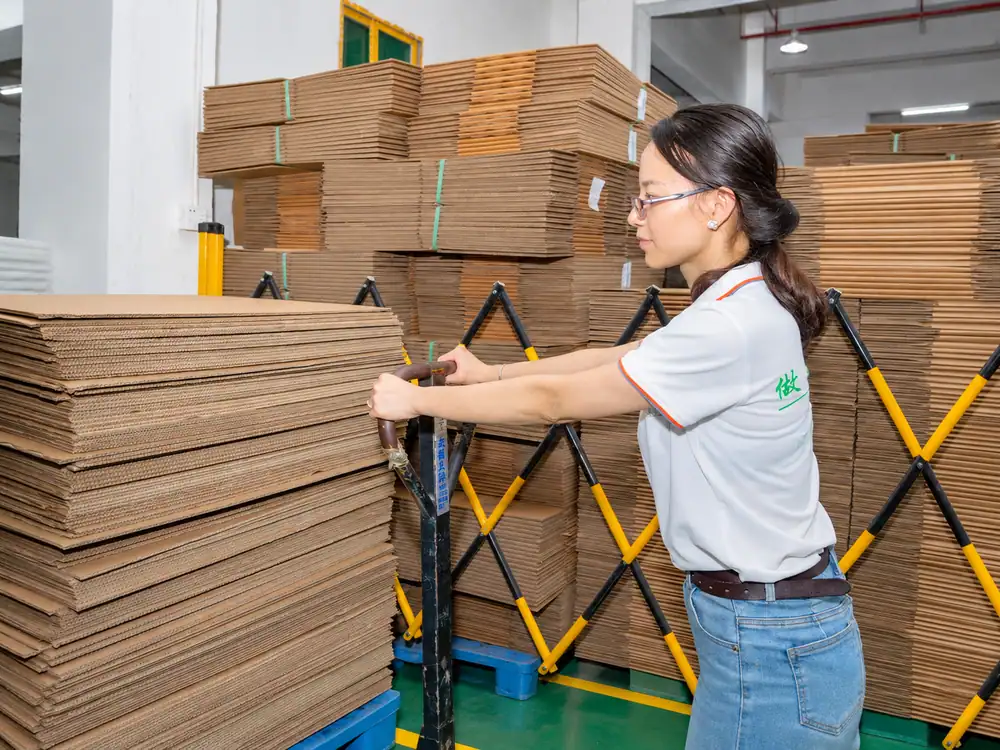
Order Release
Confirm the final packaging specification, artwork, quantities and delivery requirements before production is arranged.
Production Checks
Use the agreed specification as the reference for relevant dimensions, appearance, print placement and carton joining. Inspection requirements are discussed for the order.
Packing & Handover
Agree the supply format, bundle quantities and receiving or collection arrangements so the packaging can move into your packing operation.
Planning a Repeat Order?
Share the previous order reference and highlight changes to the product, dimensions, artwork, materials or packing method. Revisions should be confirmed before the next production run.
Questions Before Starting a Custom Packaging Order
Do I need a finished packaging drawing to get started?
You can begin with product dimensions, weight, photos and an existing packing reference. Include the order quantity and handling requirements so we can discuss a suitable box and insert arrangement.
Can the box, printing and inserts be discussed together?
Yes. We review the box structure, artwork placement and internal protection as parts of the same pack. Materials, component details and the packing sequence are confirmed for the proposed design.
What is the minimum order quantity?
Minimum quantities depend on the structure, materials and printing requirements. Tell us whether you need an initial trial or a repeat production order, and we will confirm the applicable quantity.
How long do sampling and production take?
Timing depends on specification confirmation, sample scope, material availability and production scheduling. Share your required delivery date so the sample and production stages can be reviewed together.
Does a structural sample confirm transport performance?
A structural sample helps review fit and assembly. Any performance evaluation needs its own agreed test conditions for the proposed pack. Discuss the required checks before approving production.
Tell Us What You Need to Pack
Start with the product and shipment details. We can discuss the box structure, internal protection, printing and the next steps for sampling and production.
Useful Details for Your Enquiry
- Product dimensions and weight
- Order quantity or expected repeat volume
- Product photos, drawings or an existing pack
- Printing and internal protection requirements
- Delivery location and required date